


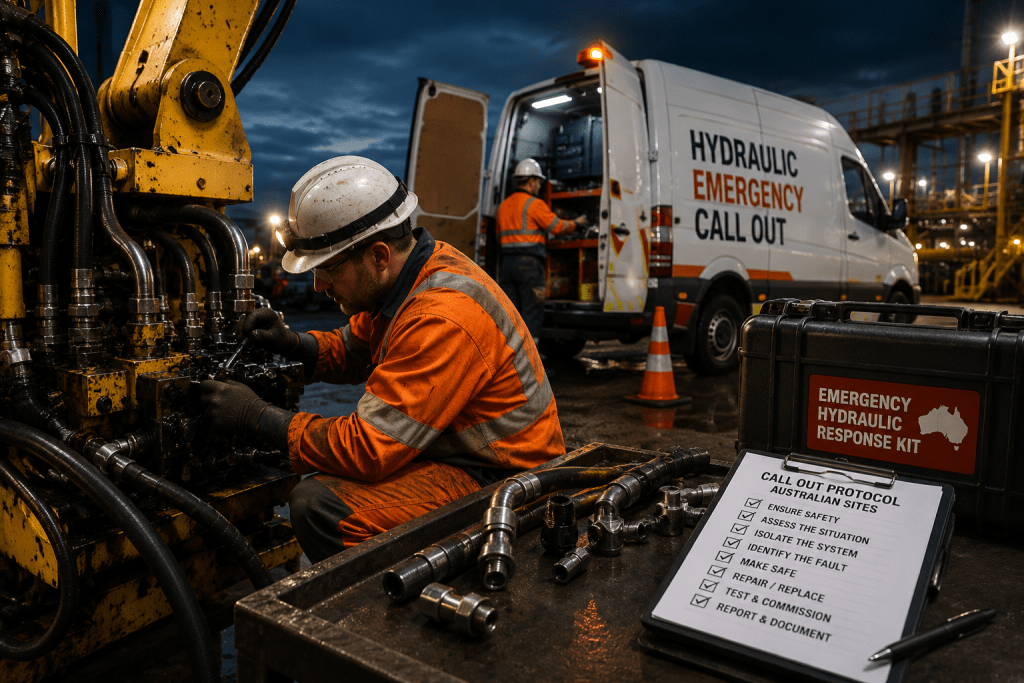
Inside Emergency Hydraulic Call Out Protocols for Australian Sites
When Minutes Matter: Responding to Hydraulic Failure
Hydraulic systems keep a lot of Australian sites moving. When one fails without warning, everything around it can stop. That can mean idle machines, missed loads, safety worries, and a lot of pressure on supervisors and operators.
On a mine, at a transport depot, in a quarry or on a construction project, a sudden hose burst or major oil leak is more than a mess on the ground. It can be a genuine safety risk for workers, a threat to nearby waterways or soil, and a direct hit to production. In winter, darker mornings, night shifts and tighter project windows can make that pressure feel even bigger.
That is why having a clear emergency hydraulic call-out protocol matters. When everyone knows what to do, who to call and what happens next, the response is calmer and faster. As an end-to-end hydraulic service provider, we move from that first phone call to on-site support with a focus on keeping people safe and getting equipment back to work across both remote and metro locations.
Recognising a True Hydraulic Emergency
Not every hydraulic issue is an emergency, but some absolutely are. Being able to tell the difference helps you protect people and limit damage.
Common warning signs that call for an immediate emergency hydraulic call-out include:
- A major oil leak that will not slow down
- A hose burst with spray or mist in the air
- Sudden loss of pressure that stops key movements
- Uncontrolled movement of booms, buckets or attachments
- A full machine lockup mid-cycle
You may also see signs of contamination, like milky fluid or metal in filters, along with unusual noises or heat. On their own, some of these might be an urgent but manageable issue. For example, a slow drip on a return line in a safe area may be logged and planned for repair if it is contained and monitored.
It moves into true emergency territory when:
- There is any risk of fluid injection injury
- Moving parts are not responding to controls
- Leaks are near ignition sources or high-traffic areas
- Oil is running toward drains, soil or water
- Operators no longer trust the machine to behave as expected
Season and site conditions can push a minor weakness into a major failure. In July, colder starts can make hoses less flexible, wet and muddy access can hide damage, and increased load on road, agricultural and mining machinery can put extra stress on fittings. When in doubt, treat the issue as an emergency until a qualified person says otherwise.
What Happens From the Moment You Call
Those first few minutes after you call for help set the tone for the whole response. A calm, clear process keeps things moving.
In a typical emergency hydraulic call-out, the first five minutes usually include:
- Confirming your name and the best contact details
- Getting the exact site location and access instructions
- Identifying the machine type and make
- Describing the fault symptoms and what the operator saw or heard
- Noting the fluid type, any special tools, and nearby hazards
This information allows us to triage the job properly. At MHS Group Solutions, we look at the risk to people, the environment and production, then match those needs to the right mobile technician and vehicle. That might mean sending a team with a wider range of hose and fittings, extra spill control gear or specific testing tools.
Dispatch and triage focus on:
- Prioritising high-risk and critical production sites
- Assigning technicians with the right skills and experience
- Loading likely hose sizes, fittings and adaptors based on your machine
- Giving you a realistic estimated time of arrival
Clear communication is as important as the tools on the truck. We confirm details by SMS or email, share any immediate safety steps for your crew, and keep you updated if traffic, weather or access conditions change. That way your team is not left guessing.
On-Site Diagnostics and Safe Containment
When technicians arrive, they do not rush straight to the leaking hose. The first job is to make the area and the machine safe to work on.
That usually includes:
- Putting on the correct PPE for the site and the job
- Completing any required site induction or sign-in
- Carrying out a job safety analysis for the task
- Applying lockout, tagout and isolation procedures
Only once the system is safely isolated do we begin diagnostics. A step-by-step approach helps find the real cause, not just the obvious damage.
Typical checks include:
- Visual inspection of all hoses, fittings, clamps and routing
- Looking for abrasion points, crushing, heat marks or rubbing
- Checking for signs of over-pressurisation or incorrect assembly
- Assessing fluid condition for contamination or aeration
- Verifying pressures where it is safe to do so
At the same time, we deal with containment. That can mean putting out drip trays, using absorbent materials on spills, blocking drains and safely removing damaged hoses or components. If a full repair is not possible straight away, we may install a temporary solution to stabilise the equipment, with clear limits on how it can be used until a permanent fix is in place.
Repair, Testing and Getting Back to Work
Once the cause is known and the area is secure, we move into repair. For many emergencies, this means fabricating a new hose or selecting the right replacement from stock, then pairing it with the correct fittings and adaptors.
Key steps in the repair process are:
- Matching hose size and rating to the original equipment
- Choosing fittings that suit both the hose and machine ports
- Assembling hoses to the relevant Australian Standards
- Replacing related seals, O-rings or filters where required
Fit-up is only part of the job. Proper testing makes sure the repair will hold up under real site conditions. After reconnecting, we bleed air from the system, slowly bring the machine up to pressure and then test under controlled load. We check actuator movements, control response and listen for any unusual noise.
We also look for small signs of trouble like:
- Micro-leaks at fittings or crimps
- Hoses that move or twist more than they should
- Components running hotter than expected
Before we leave, we record what was done. That often includes a digital service report, photos of the failure and repair, notes on suspected root causes and suggested next steps. If we see the same fault more than once on a machine or circuit, we may recommend workshop-based overhauls or a review of the hydraulic design.
Building Stronger Systems Before the Next Call
Every emergency hydraulic call-out is a chance to make the next one less likely and easier to handle. Once the dust has settled and production is steady again, it helps to review what happened.
Useful questions for site managers include:
- Did operators notice early warning signs but feel rushed?
- Were hoses or fittings already flagged in inspections?
- Did weather or access conditions contribute to the failure?
- Was isolation and emergency response slow or uncertain?
From there, you can put more proactive steps in place. At MHS Group Solutions, we support that by offering scheduled hose audits, on-site hose registers, standardised spares kits and engineered improvements to hose routing and clamping. Small changes, like better protection in abrasion zones or moving hoses away from pinch points, can make a big difference over time.
Setting up a clear emergency response plan with your team means everyone knows their role when the next fault appears. With the right preparation, your crew can quickly recognise a true emergency, secure the area, share accurate information and work smoothly with hydraulic specialists so that failures are handled faster, safer and with less downtime.
Get 24/7 Hydraulic Support When Downtime Isn’t An Option
If you are facing an unexpected breakdown, our team at MHS Group Solutions is ready to respond with a rapid emergency hydraulic call-out to get your equipment back up and running. We bring the right parts, expertise and testing gear to fix issues safely and efficiently, any time of day or night. To discuss your immediate needs or arrange standby support for your operation, contact us today.