


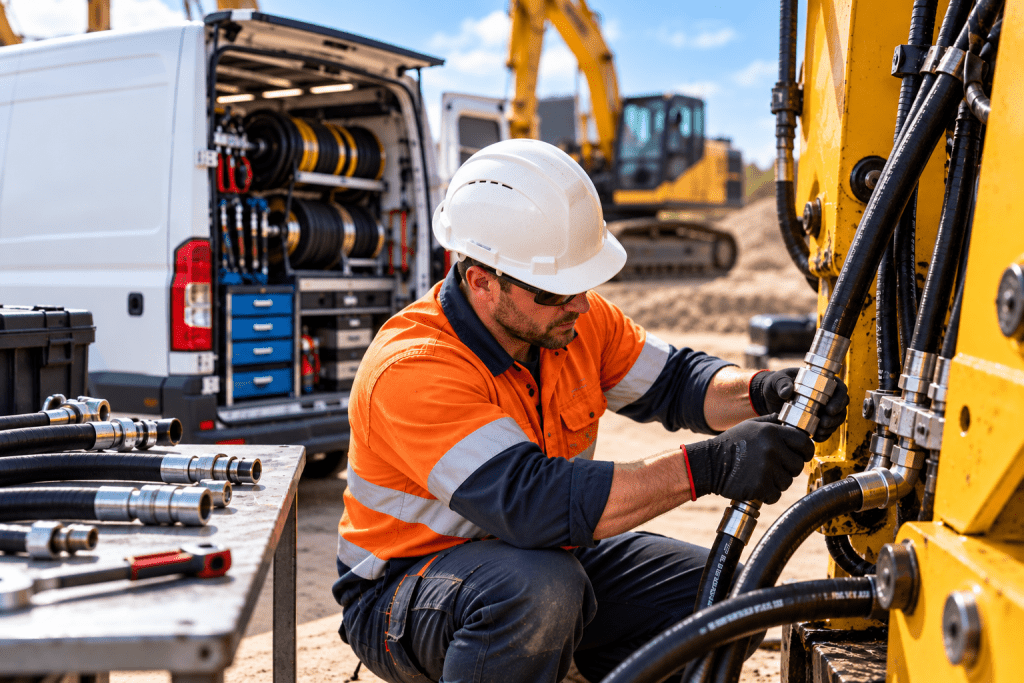
Faster Call Outs, Less Downtime: This Summer
Hydraulic hoses have a hard life, and they have it even harder in an Australian summer. Higher ambient temps, dust, long shifts and constant vibration put serious stress on every hose, fitting and seal on your machines. When you add in peak demand across quarrying, construction, transport and agriculture, the margin for error gets very small.
A failed hose in the middle of a heatwave does more than stop one piece of gear. It can stall a production line, leave whole crews standing around, push back project milestones and blow out budgets. That single leak or burst suddenly turns into lost hours and pressure from every direction.
The real edge is no longer just having a mobile hose truck on call. To keep work moving, you need to rethink the whole hydraulic hose assembly service model, from the first phone call to the final pressure test, so it is built for speed, safety and reliability in tough Australian conditions.
Why Traditional Hose Call Outs Are Too Slow
Many businesses accept slow hose call outs as just part of the job. The truth is, a lot of the delay has nothing to do with the actual repair and everything to do with how the service is set up.
Common time wasters include:
- Vague fault descriptions, like “hose leaking near the ram”
- Confusing equipment IDs or missing asset tags
- Travel to remote or congested sites with poor directions
- Technicians arriving without the right hose, fittings or adapters
If the tech needs to leave site to grab parts or come back the next day, that one fault can turn into multiple visits for the same issue. While this is happening, you are paying for:
- Crews waiting with nothing to do
- Hired gear sitting idle
- Delayed loads, missed shifts and stack-ups with other contractors
During busy summer project schedules, this “dead time” hits even harder. Every hour lost to a slow repair can push you into night work, overtime and awkward rescheduling with other trades.
On top of that, relying on generic service providers with limited hydraulic know-how often leads to quick patch-up jobs rather than well-thought-out fixes. A hose might be replaced like for like, but if the routing is wrong or the assembly is not suited to the duty cycle, you are lining yourself up for the same failure again when the temperature climbs.
Building a Smarter Hydraulic Hose Assembly Service
A faster hydraulic hose assembly service starts long before the truck rolls through the gate. It starts with better information and smarter planning around every call out.
Structured pre-call diagnostics make a huge difference, such as:
- Clear photos of the failed hose and surrounding area
- Simple checklists that capture symptoms and operating conditions
- Accurate equipment details, including model, location and access notes
When we receive this information up front, we can load the service vehicle with the right hose types, fittings, adapters and tooling the first time. That cuts down guesswork and lets the technician get straight to work when they arrive.
Stock levels matter as well. Well-loaded service vehicles combined with strategically located depots across metro, regional and remote areas can significantly reduce travel and waiting time. You are not just relying on one truck that has to criss-cross large distances with limited gear on board.
The real benefit comes when you partner with a specialist team that combines:
- Hydraulic hose assembly service
- Fluid transfer systems knowledge
- Custom engineering skills
That mix helps turn a breakdown into an opportunity to fix the root cause, instead of just swapping out a failed hose and hoping for the best once the temperature goes up again.
Engineering Reliability Into Every Hose Assembly
Speed is important, but speed without reliability just sets you up for another breakdown. Reliability starts with the basic choices made on every hose assembly.
Key factors that stretch hose life and reduce heat-related failures include:
- Correct hose selection for pressure, temperature and media
- Thoughtful routing to avoid pinch points and abrasion
- Proper bend radius so the hose is not kinked or over-stressed
- Adequate protection like sleeves, guards and clamps to stop rub points
On the assembly side, quality fittings and correct crimp settings are non-negotiable. Consistent crimping standards and pressure testing help prevent leaks, pull-offs and early failures when systems are running hard in high ambient temperatures.
Documentation matters too. When assemblies are recorded with specifications and locations, follow-up work becomes faster and more accurate. You get fewer surprises, less trial and error and a clearer picture of what is actually installed across your fleet.
At MHS Group Solutions, we focus on designing and installing complete fluid power and fluid transfer systems, not just isolated hoses. That means each hose assembly is treated as part of a wider engineered system, so flows, pressures and layouts all work together under load and in the harsh conditions that Australian sites throw at them.
From Breakdown Response to Predictive Readiness
Emergency breakdowns will never disappear completely, but they do not have to be your main way of working. A more planned approach gives you better control and shorter call out times when something does go wrong.
A shift from reactive to proactive service can include:
- Regular visual inspections during normal servicing
- Planned hose replacements in cooler or lower-demand periods
- Simple condition checks around clamps, guards and heat-affected zones
Building an asset register of hoses and assemblies is a powerful step. When each critical hose has a record of:
- Size, type and pressure rating
- Location and function
- Install date and service history
you can start to schedule changes before summer ramp-up, based on actual risk instead of guesswork. This helps keep your highest risk hoses fresh when you need them most.
The same records make any future breakdown responses faster and cleaner. Technicians already know the assets, specs and site conditions, so they can load the right gear, access the right area quickly and get you back online with less back-and-forth and fewer surprises.
Partner with a Team Ready for Your Next Call Out
If you look back at your last few hot-weather periods, you can probably see clear patterns: repeat failures on the same machines, delays waiting for parts, late-night rush jobs to catch up lost production. These are often symptoms of a hydraulic hose assembly service model that has not kept up with how hard your gear is working.
Rethinking your approach to hose assemblies, from pre-call diagnostics to engineered system design and predictive maintenance, can take the heat out of your next busy season. At MHS Group Solutions, we apply our experience in industrial and hydraulic fluid power across Australia to help reduce downtime, improve reliability and support your crews with faster, safer and more dependable call outs when they are under pressure.
Get Started With Your Project Today
If you need reliable, on-spec hose solutions that stand up to tough conditions, our team at MHS Group Solutions is ready to help. Explore our hydraulic hose assembly service to make sure your equipment is safe, compliant and working at its best. Speak with our technicians about your requirements and we will recommend the right setup for your machinery. To book a job or ask a question, simply contact us and we will get back to you promptly.
Related reading: learn more about our 24/7 mobile breakdown service, see our mobile hydraulic service in Melbourne, or read Inside Emergency Hydraulic Call Out Protocols for Australian Sites.