


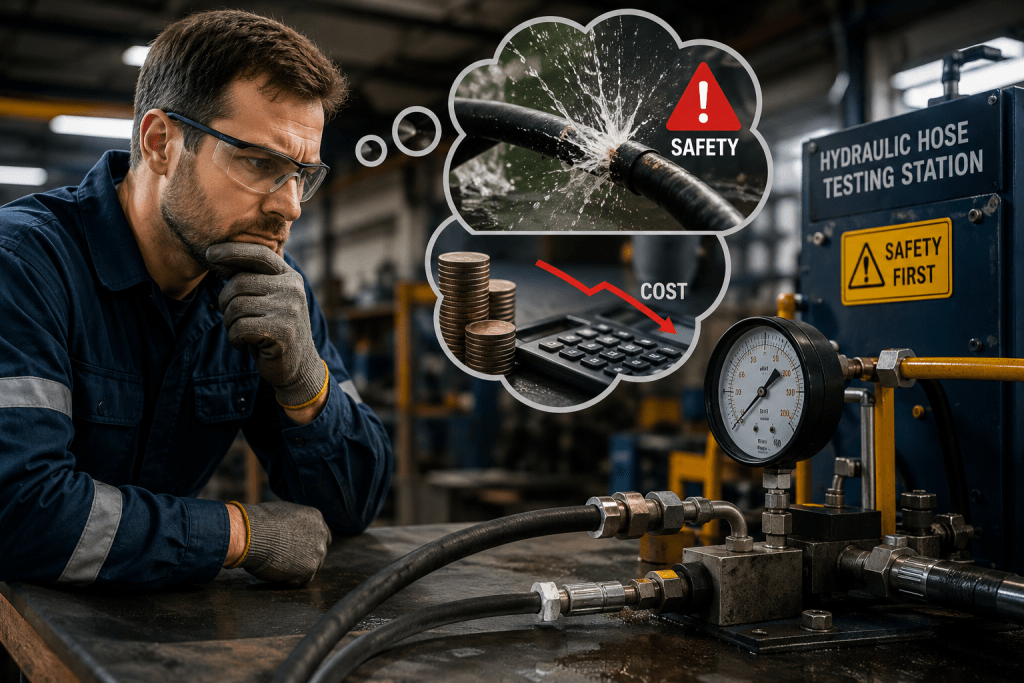
Questioning Your Hydraulic Hose Testing Routine for Safety and Cost
How Safer Hose Testing Protects Lives and Budgets
Hydraulic hose testing is not just about passing an audit. It sits right at the point where people, equipment, and production all meet. When a hose fails under pressure, it does not just leak a bit of oil. It can spray hot fluid, drop loads, stop machines and put workers in harm’s way. One preventable failure can shut down a whole line and throw your schedule out.
On many sites, hose testing slips into a tick-the-box routine. A quick look, a quick signature and everyone moves on. The problem is that hydraulic systems are working harder, in tougher conditions, and small faults can grow fast. When we question the way we test hoses, we open the door to safer work areas, fewer breakdowns and fewer unpleasant surprises.
Treating hydraulic hose testing as a strategic safety and cost-control tool helps you cut unplanned downtime, keep ahead of compliance expectations and protect both people and assets. This matters even more for high-demand Australian operations, including remote and 24/7 sites that simply cannot afford equipment sitting idle. Mid-winter can be especially hard on hoses, as temperature swings, moisture and heavy workloads all add extra stress.
Hidden Risks Lurking in “Good Enough” Hose Testing
A lot of hose inspection routines fall into the comfort zone of “good enough”. Common traps include:
- Only doing a quick visual walk‑around
- Relying on an old test schedule that never changes
- Waiting for a failure before digging deeper
- Assuming new hoses do not need close checking
The trouble is that many failure modes hide inside the hose or fitting. A basic look from the outside can miss:
- Internal abrasion from misalignment or vibration
- Micro-cracks from long-term pressure cycling
- UV and weather damage on exposed hose covers
- Contamination slowly eating away at components
- Incorrect crimping that only shows under real load
Across Australia, site conditions push hoses hard. Dust, mud, heat, cold mornings, salt in coastal air and constant movement on mobile plant all speed up wear. A hose that once lasted for years might now fail much sooner if it is not selected, installed and tested with these realities in mind.
The cost of under-testing is not just the price of a new assembly. You could be dealing with unexpected bursts, slippery work areas from spills, environmental clean-up, worker injury and damage to pumps, cylinders or production gear. Regulators and insurers are also looking more closely for clear, evidence-based inspection-and-testing practices, not casual “she’ll be right” habits.
Rethinking Hydraulic Hose Testing for Real-World Loads
Hydraulic hose testing should be more than a simple pressure check in a workshop. It works best as a whole-of-system safety strategy that takes in how the hose is used, where it sits on the plant and what happens if it fails.
A stronger hose testing regime usually includes:
- Defined test intervals based on duty cycle, environment and pressure
- Extra focus on hoses in high-risk positions or near people
- Clear steps for tagging, recording and reviewing test results
There are different types of tests, and each has its place:
- Proof testing: Pressurising the hose to a set level below burst pressure to confirm it holds without leaks or movement. Good for new assemblies or after repair.
- Burst testing: Taking sample hoses to destruction, under controlled conditions, to understand true limits. Useful for development, not for every in-service hose.
- Functional testing on the asset: Running the hose in the real circuit, under real loads, to pick up routing, vibration and temperature issues that a bench test may miss.
Traceability ties all this together. Tagging each hose assembly, logging where it is installed, recording test dates and outcomes, and keeping a simple hose register gives you a clear view of what is happening across the site. You can then spot patterns, update intervals and show auditors clear evidence of control.
Teams that understand fluid transfer systems, custom engineering and correct hose and fitting selection can design testing that reflects actual in-service conditions. That means thinking about shock loads, cold starts, stop-start work, contamination and access limits, not just ideal conditions in a test bay.
How Smarter Testing Slashes Downtime and Total Cost
Hydraulic hose testing will always take some time. The key question is whether that time is spent in a planned way, or at 3am in the rain with a critical machine offline. When testing is structured and proactive, it becomes a tool to cut unplanned downtime and total cost.
Smarter, data-driven testing helps you:
- Compare the impact of planned testing against breakdowns and overtime
- Spot which machines or circuits chew through hoses fastest
- Adjust hose type, routing or protection based on real failure history
- Reduce surprise failures in areas where access is difficult or dangerous
Optimised intervals matter. Over-testing can waste labour and workshop capacity, while under-testing leaves you exposed. By linking test timing to the actual risk profile of each hose, you focus effort where it pays off most.
Quality hose and fittings, correct assembly, good routing and proper clamping all work hand in hand with testing. If hoses are rubbing, twisted or unsupported, they will keep failing the same way, no matter how often you test. Fixing these basics extends service life and reduces the number of test failures you need to manage.
Even with strong systems, breakdowns will still happen. That is when having support from a team that offers 24/7 emergency response and large local stock holdings becomes the safety net, cutting wait times and getting production back on track faster.
Preparing Your Hose Testing for Winter and Peak Demand
Australian winters bring their own set of stresses for hydraulic systems. Colder mornings can make hoses and seals less flexible. Condensation can form on lines and in tanks. Many mining, agriculture and construction sites also run hard through these months, while processing plants often use planned windows for heavier maintenance.
A winter-ready hydraulic hose testing checklist can include:
- Extra checks on exposed hoses for stiffening, cracks and leaks on cold start
- Closer inspection around fittings where metal and rubber meet
- Confirming test pressures are set to cover real peak loads
- Reviewing guards, sleeves and clamps that may have loosened or worn
This is also a smart time to tidy up your hose register and test schedule. Aligning upcoming outages or shutdowns with hose inspection and testing windows means less disruption later when workloads spike. You can clear the backlog on low-risk assets and focus short shutdowns on critical lines.
Fluid cleanliness plays a big role too. Testing is more effective when it sits alongside contamination control, filtration checks and correct fluid transfer practices. Dirty oil shortens hose and component life and can mask root causes if you are only looking at the hose itself.
For remote or high-duty sites, planning seasonal testing programs brings peace of mind before pushing equipment harder. Support from people who work with end-to-end industrial and hydraulic fluid power systems across Australia can help shape a plan that fits your site, not just a generic checklist.
Take Control of Your Hose Safety Before the Next Failure
The main shift is simple: stop waiting for a big incident to ask whether your current hydraulic hose testing routine is good enough. It is better to ask tough questions now, when you still have room to adjust without the pressure of a major failure hanging over your head.
A quick self-check can start with questions like:
- When were our most critical hoses last tested, and how do we know?
- Do we track hose failures with any structure, or just replace and move on?
- Is there a clear, current hose register for the site?
- Who actually owns the hydraulic hose testing strategy here?
From there, it makes sense to prioritise high-risk areas: high-pressure systems, key production lines, mobile plant and any zone where a hose burst could injure someone or cause an environmental spill. Getting these under control first delivers the biggest safety and reliability gains for the least effort.
MHS Group Solutions works with industrial and hydraulic fluid power systems across Australia, helping sites move from basic, box-ticking inspections to practical, real-world hydraulic hose testing. With the right approach, you can expect fewer breakdowns, safer teams, stronger compliance and more predictable maintenance planning, supported by end-to-end services that fit demanding operations.